 Licensed & Insured |
  Free Written Estimates
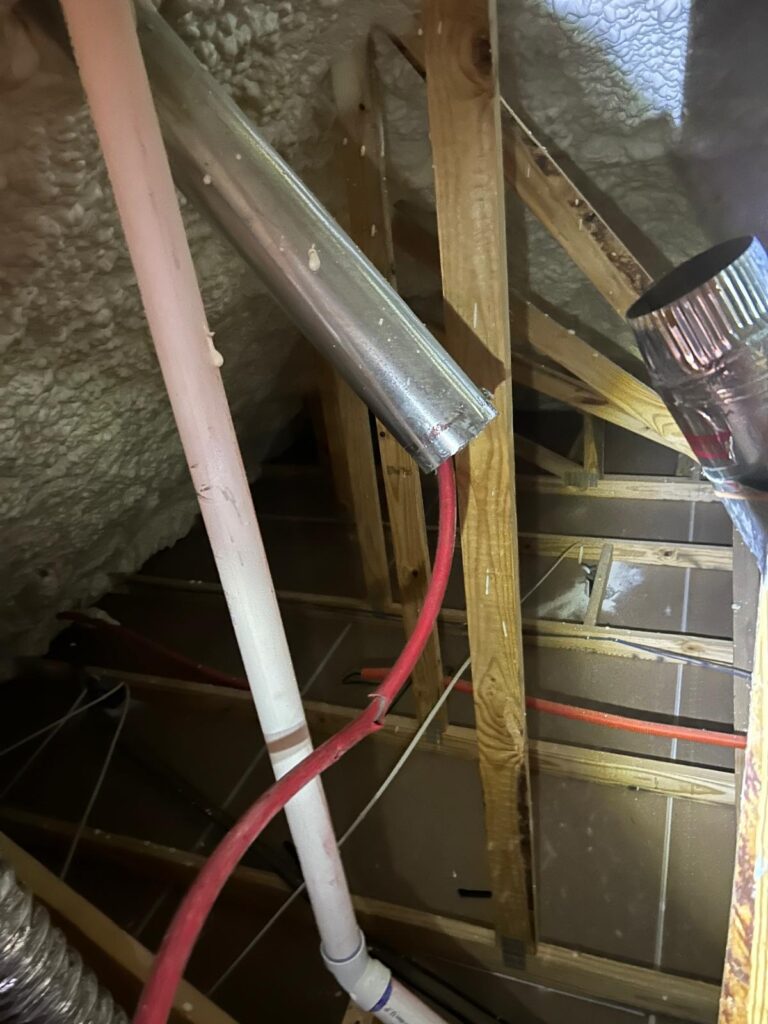
If a load of towels needs a second cycle to come out dry, the dryer usually isn’t the thing that’s failing. Most of the time it’s the duct behind it, packed with lint or crushed into a shape air can’t move through. You can check the parts that matter yourself in about two minutes, with no tools and without pulling the machine out.
The Two-Minute Check
Start a normal load and walk through this list while it runs. You’re not diagnosing anything, just looking for signs that airflow has dropped off.
- Clothes take more than one cycle. A regular load should come out dry the first time. If jeans and towels need another forty minutes, moist air isn’t leaving the house fast enough, so it condenses back into the clothes.
- The dryer or the clothes are hot to the touch. Warm is normal. Uncomfortably hot at the end of a cycle means heat is backing up inside the machine instead of going out the duct.
- You smell something scorched. A hot-dust or burning-lint smell in the laundry room is worth acting on right away. Stop running the dryer until you know where it’s coming from.
- Lint is collecting outside. If your vent comes out through an exterior wall, walk around and look at the hood from the ground. Lint stuck to the siding around it, or a small pile of it underneath, means the duct is shedding more than it’s clearing.
- The flap doesn’t open while the dryer runs. This is the fastest test there is, on any hood you can reach from the ground. With a load running, hold your hand near it. You should feel a steady push of warm air and the flap should be standing open. A flap that stays shut, or barely lifts, means almost nothing is getting through.
- The laundry room turns humid. If the room feels close and damp after a couple of loads, moisture that belongs outside is staying inside.
Any one of these on its own might be nothing. Two or three of them together and the run is restricted.
If your vent terminates on the roof, skip the outdoor part of this list. Don’t put a ladder up for it. The indoor signs tell you enough, and a roof termination is mine to check, not yours.
Why Lint Is Genuinely a Fire Risk
Lint is fine, dry cotton fiber with an enormous amount of surface area, which is close to the definition of tinder. Sitting loose in a duct it doesn’t do much on its own. The problem starts when there’s enough of it to choke the airflow.
A dryer sheds heat by pushing it out the duct. Restrict that and the heat stays in the drum and the cabinet, the high-limit thermostat starts cycling to protect the machine, and the temperature around all that packed lint climbs higher than it was ever meant to go. The National Fire Protection Association identifies failure to clean as the leading factor in home clothes dryer fires. That’s the whole mechanism: heat and fuel in the same place.
One thing on that list isn’t a venting question at all. If you have a gas dryer and you smell gas, not scorched lint but actual gas, leave the house and call the gas company from outside. Don’t troubleshoot that one.
The Length of the Run Matters as Much as the Lint
Two houses can have the same dryer and completely different risk, because of what sits between the machine and the outside wall. A short, straight run out the back of a first-floor laundry room clears itself reasonably well. A second-floor or interior laundry room that has to travel twenty or thirty feet through a wall cavity and an attic, with three or four elbows in it, does not. Every elbow slows the air down and gives lint a corner to catch on.
Then there’s the piece almost nobody looks at: the flexible connector behind the machine. When a dryer gets pushed back tight against the wall, that connector gets crushed, kinked, or folded over on itself. I find that constantly. A long run with a crushed connector at the start of it needs dryer vent cleaning along its entire length, not just the first arm’s reach behind the machine.
Two more things worth noticing, if the hood is one you can see from the ground. A vent hood with a bird screen or a cage across it clogs quickly, because lint catches on mesh. And a duct that ends in an attic or a crawlspace instead of outdoors is dumping warm, wet air where the house has no way to get rid of it.
This Is Year-Round Work
Chimneys have a season. Dryers don’t. The machine runs the same loads in July that it runs in January, so lint accumulates at the same rate all year long. If the last cleaning is far enough back that you can’t remember it, the month on the calendar isn’t the deciding factor.
What Happens When I Come Out
I do every job myself. I open up the run, put a camera on what’s actually inside it, and show you the photos on screen before I quote anything. If the lint is light and the connector is in good shape, I’ll tell you that. If the duct is crushed flat inside a wall, you’ll see the picture of it instead of taking my word for it. Either way you get a written estimate and you decide.
If you went through the check above and something on it matched, call or text me at 214-300-5295 and describe what you’re seeing. I’ll tell you straight whether it sounds like something worth me coming out for.